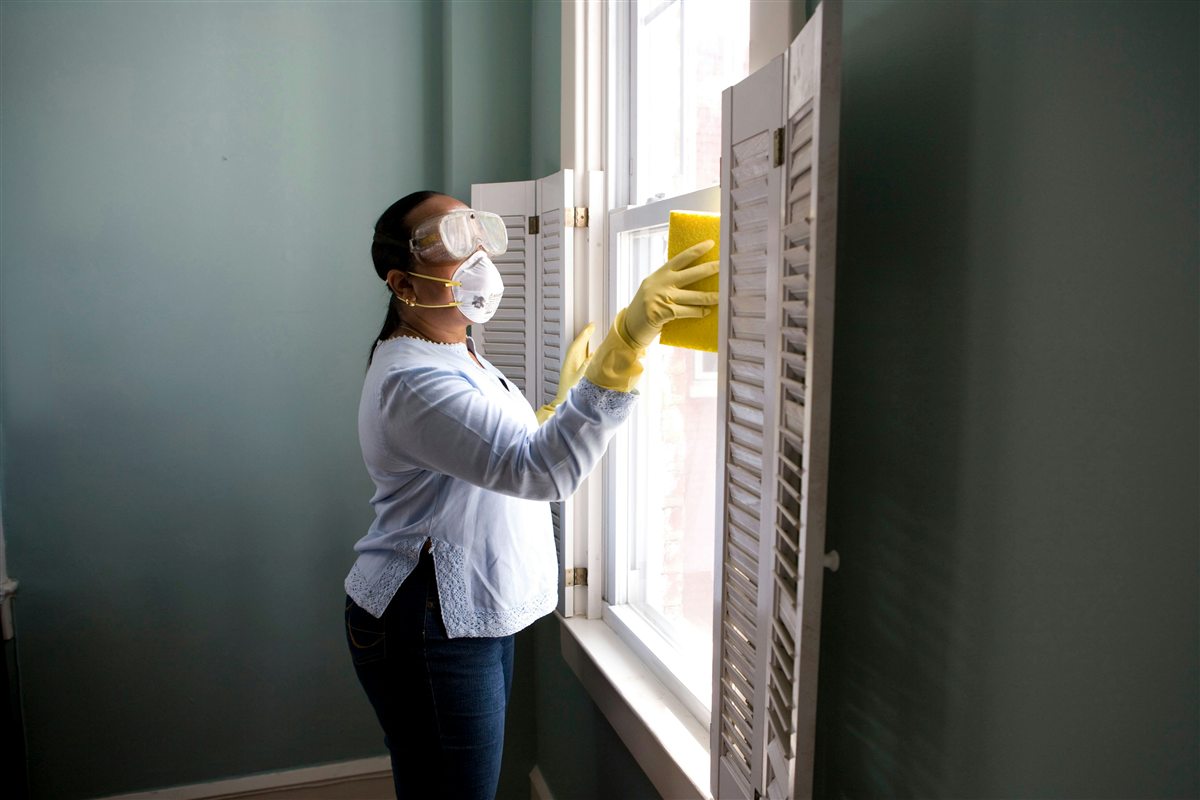
Healthy-home cleaning is mostly about prevention. Catch grit at the entrance, contain cooking residue, dry wet areas and give everyday objects a home. These small systems reduce the amount of aggressive cleaning required later.
The daily reset
Choose a short time—after dinner or before bed—and return visible items to their places. Wipe the kitchen worktop, rinse the sink, hang wet towels, sweep obvious crumbs and empty waste that could create odour.
This is not the time for perfection. The goal is to stop today’s mess becoming tomorrow’s buildup.
Control dust at its sources
Use entrance mats and remove outdoor shoes where practical. Vacuum fabric surfaces and floor edges with a maintained machine, and damp-dust rather than sending particles back into the air. Clean fan blades and vents carefully when the appliance is safely switched off.
People with allergies or respiratory conditions should follow medical advice and may benefit from professional guidance on indoor air, filtration and humidity.
Take moisture seriously
Run bathroom extraction, dry shower edges and address leaks promptly. Allow cleaning cloths and mops to dry fully between uses. In humid weather, create safe airflow and avoid pushing furniture tightly against persistently damp walls.
Cleaning can remove surface residue, but repeated mould usually signals a moisture source that must be investigated.
Create weekly zones
Assign one deeper task to each day or weekend: bathrooms, kitchen appliances, bedding, floors, or a clutter hotspot. Rotating zones keeps the work bounded and ensures neglected areas receive attention without turning every Saturday into a full-house project.
- Monday: laundry and bedding.
- Wednesday: bathroom fixtures and mirrors.
- Friday: refrigerator check and kitchen fronts.
- Weekend: floors plus one rotating deep-clean zone.
Keep tools ready and clean
Store a small, labelled kit close to where it is used, but safely away from children and pets. Wash microfibre cloths appropriately, empty vacuum containers and rinse tools after dirty jobs. A contaminated cloth can spread residue instead of removing it.
Know when to ask for help
Professional support can make sense after renovation, before moving, during illness recovery, when mobility is limited or when buildup requires equipment you do not own. The aim is not to outsource every wipe—it is to keep the home manageable and safe.