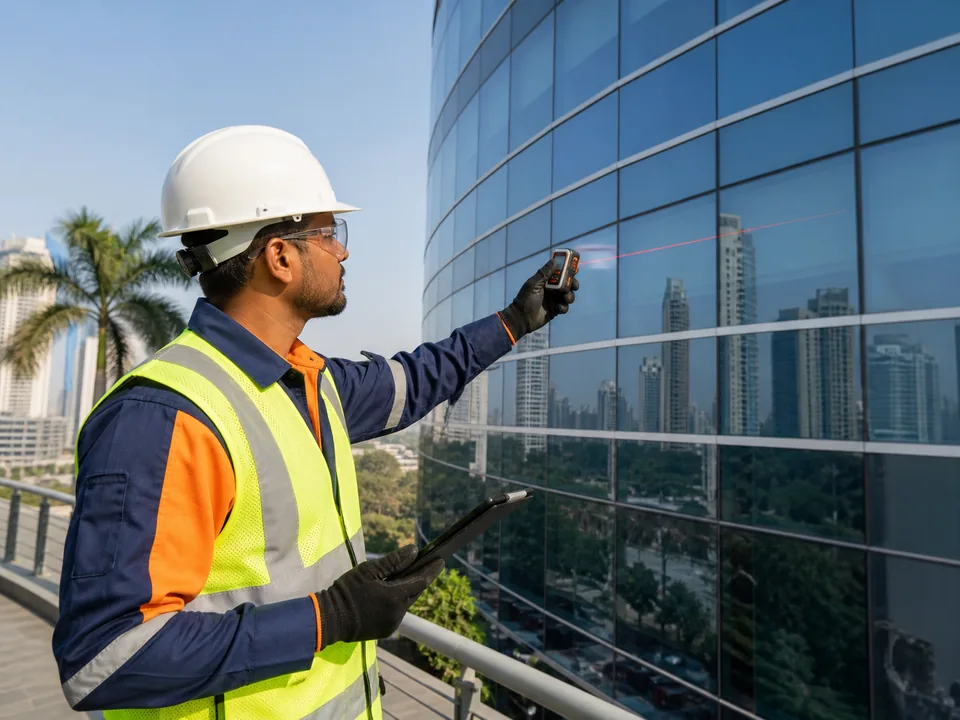
Safe facade cleaning begins before any technician reaches the building exterior. The planning stage defines access, controls, communication and inspection expectations.
Survey the building first
A site survey should identify height, facade material, anchor or access options, water availability, public movement, parking constraints and sensitive areas. This is where the cleaning method starts to become specific to the building.
Match access method to risk
Suspended platforms, rope access, lifts, poles, robotic systems or staged access each have different requirements. The safest method is not always the fastest; it is the one that suits the facade, surroundings and task.
Respect weather limits
Wind, rain, lightning, heat and poor visibility can change the risk profile quickly. A clear stop-work rule protects the team and the public, especially around high-rise exteriors.
Control the area below
Facade work affects people at ground level. Barricades, signage, spotters, water management and communication with security teams reduce the chance of disruption or unsafe movement below the work zone.
Document completion and exceptions
Photos, supervisor notes and exception reports help property teams understand what was completed, what could not be accessed and what needs repair or follow-up.
For a practical recommendation, share the building height, facade type, location, visible staining and access constraints with Acleanz before approving a method.