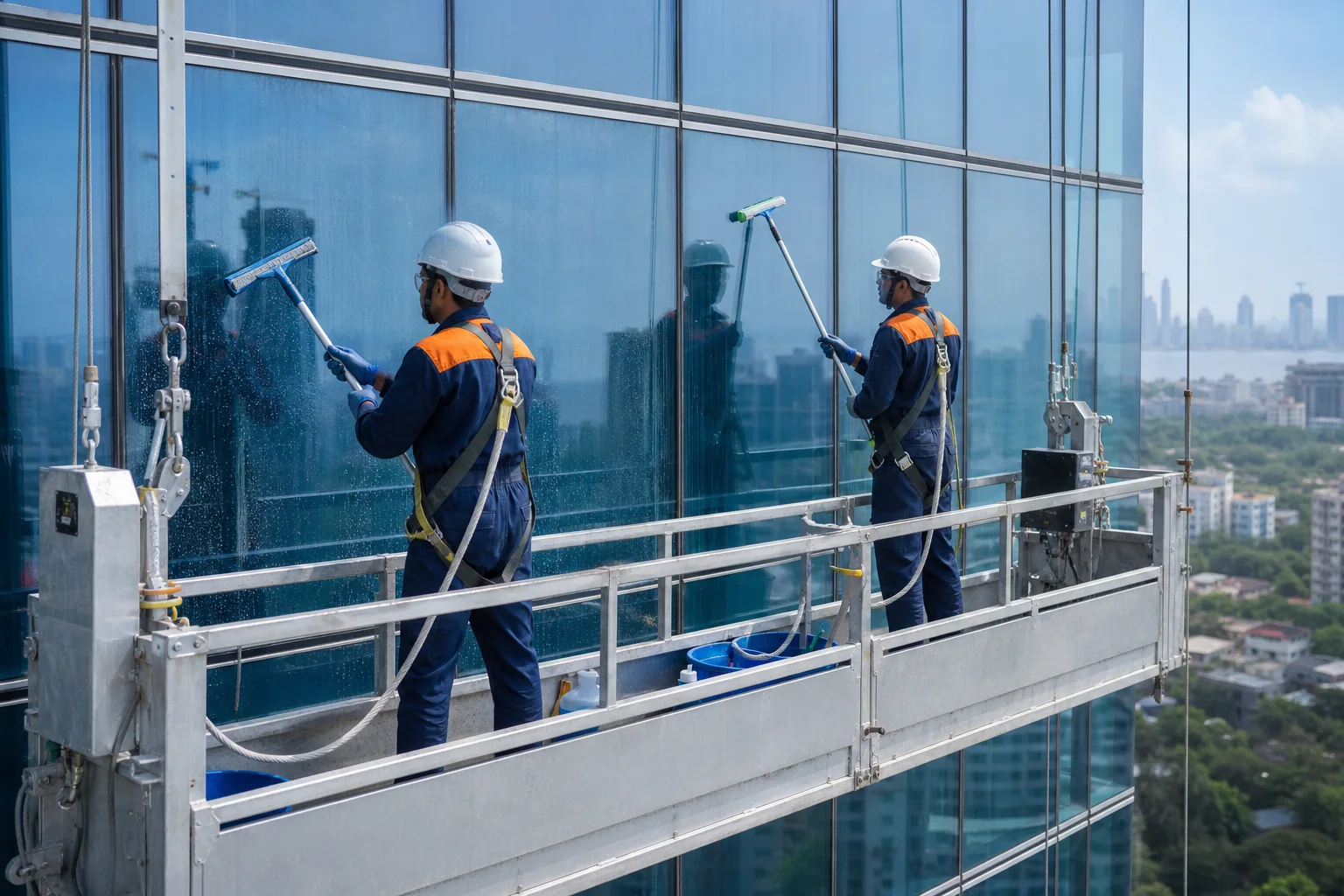
A clean building exterior is not only about appearance. It influences first impressions, inspection routines, material care and the way occupants feel about the property.
Exterior condition shapes confidence
The facade is often the first surface customers, tenants, residents and visitors judge. Dust, mineral marks, traffic pollution and rain streaks can make even a well-managed building look neglected. A planned cleaning cycle protects the everyday impression of the property and supports the care already happening inside.
Cleaning supports material life
Glass, aluminium composite panels, stone, sealants and cladding systems all respond differently to pollution and moisture. Regular inspection-led cleaning helps teams notice staining, failed sealants, drainage marks and surface damage earlier, before small issues become larger maintenance problems.
Method matters more than speed
Facade work needs access planning, weather checks, public-area control and trained supervision. A professional method considers anchor points, traffic below, water control, equipment condition and emergency response before work starts.
A predictable schedule is easier to manage
Reactive cleaning usually happens after staining is already obvious. A planned schedule lets facility teams coordinate tenant notices, water access, access equipment and inspection windows with less disruption.
What to ask before approving work
Ask how the facade will be surveyed, which surfaces are included, what access method is proposed, how public areas will be protected and how completion will be inspected. Clear answers turn facade cleaning from a one-time activity into a managed maintenance process.
For a practical recommendation, share the building height, facade type, location, visible staining and access constraints with Acleanz before approving a method.